Dordogne Tourist Attractions
Font de Gaume

Located in Les Eyzies, on the Sarlat road, Font de Gaume Cave is a showpiece of Magdalenian engravings and paintings from around 14 000 BC. The flints (chisels, scrapers, blades) and other things found in the cave during the excavations testify to a continual occupation since the Mousterian age, or the age of the Neanderthals.
Discovered in 1901 by D. Peyrony, the Cave, 130 m long, contains about 250 paintings. The visitor can only see 30 of them, the most beautiful ones and the best preserved. After 60 m underground, the “Rubicon” is the beginning of the decorated part of the cave, with red dots on the left wall.
Combarelles

On the left bank of the Beune River, a group of caves are located at the opening of the small Combarelles Valley. The entrance to the Les Combarelles Caves is located on the right side of the departmental road 47, 2 kilometers after the village of Les Eyzies in the direction of Sarlat.
The environment of the cave consists essentially of agricultural lots in front, surrounded by a dense tree cover. In order to preserve the natural landscape, there is no picnic area in close proximity. There is, however, a gravel parking lot around 100 meters from the cave entrance.
Lascaux

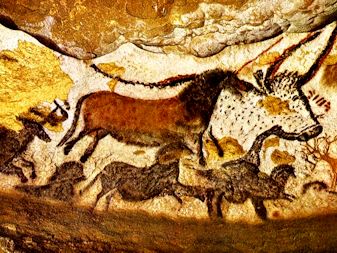
Lascaux is the setting of a complex of caves in southwestern France famous for its cave paintings. The original caves are located near the village of Montignac, in the Dordogne département. They contain some of the most well-known Upper Paleolithic art. These paintings are estimated to be 16,000 years old. They primarily consist of realistic images of large animals, most of which are known from fossil evidence to have lived in the area at the time. Lascaux was added to the UNESCO World Heritage Sites list in 1979.
Forte de Reignac

A stone’s throw from the Vézère, across from a ford, prehistoric men settled here more than 20.000 years ago.
Preserved in exceptional condition and fully furnished with period furniture, it is the only monument of its kind in France, a “Chateau falaise” fully intact. Listed a historical monument, this is the strangest, most secret, most extraordinary, and also the most mysterious of all the Périgord châteaux. Built under the escarpments, this refuge juts out from the rock into which it has been dug and conceals huge rock shelters that have witnessed some interesting events of our civilisation for more than 20,000 years.
Commarque

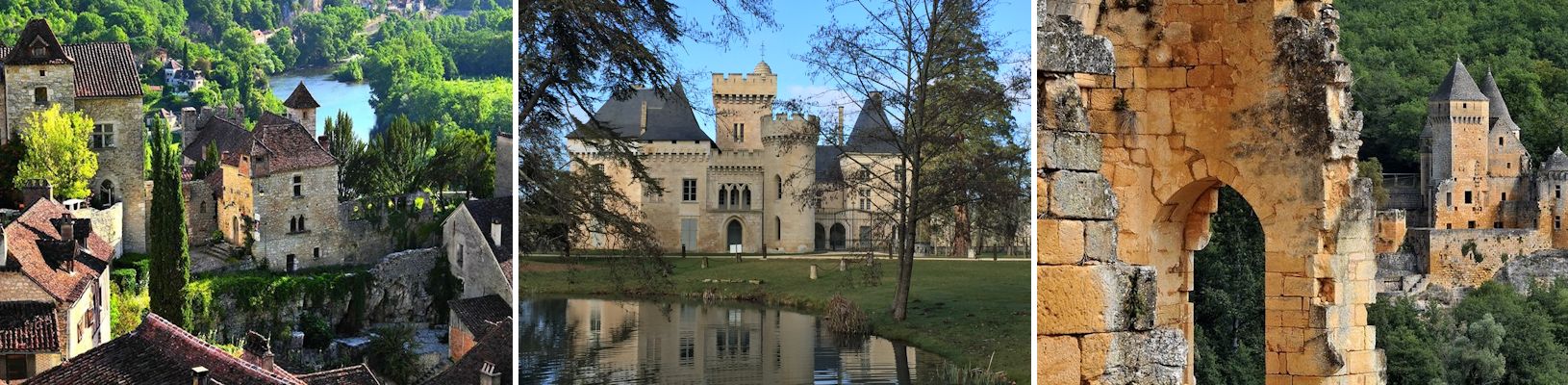
The Beune Valley has been occupied for a very long time. Around Commarque, prehistoric man has left numerous traces of his passage. Not far from the site at Commarque, Paleolithic man left two female statuettes known as the Venus of Sireuil and the Venus of Laussel. On the other side of the valley, in the shelter at Cap Blanc, one can admire a frieze of prehistoric sculptures. Under Commarque Castle there is a cave where Magdalenian man carved animals on the wall, notably a very beautiful life-sized horse (not open to the public).